Overview
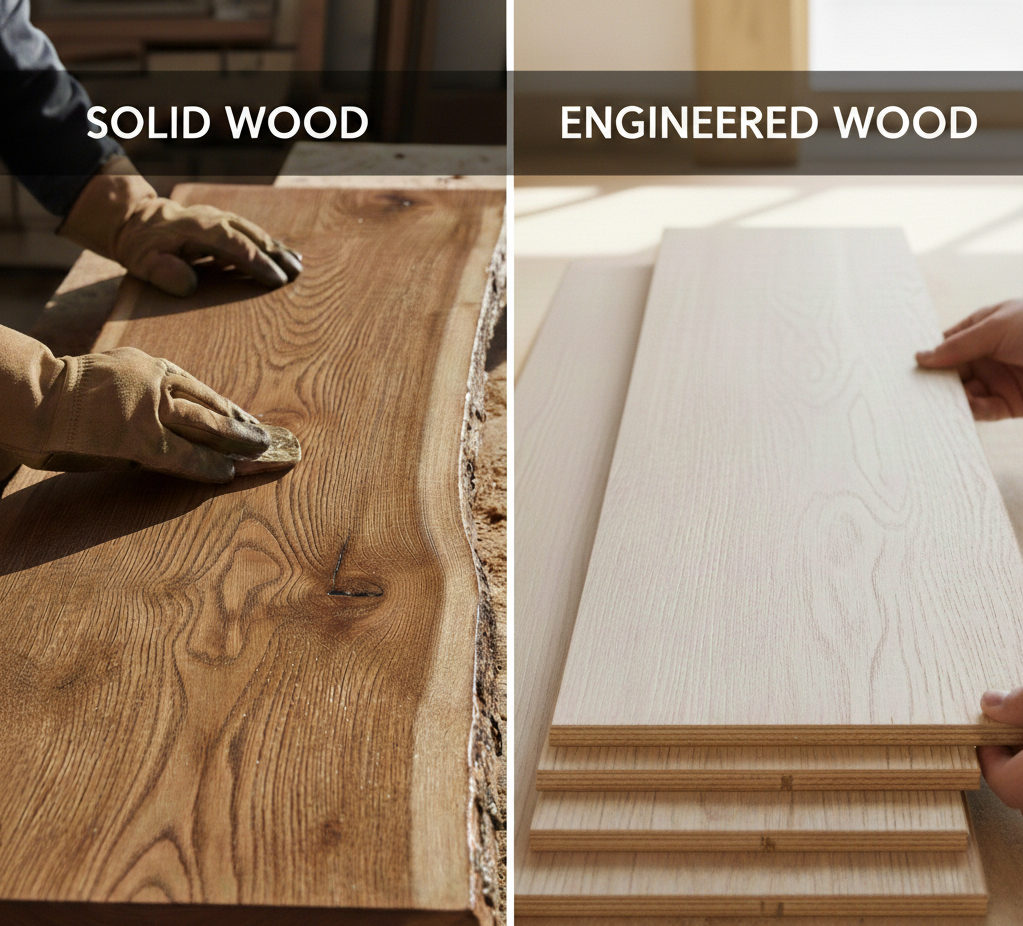
When choosing between solid wood and engineered wood, homeowners should consider durability and environment. Solid wood consists of single, natural planks that can be sanded and refinished multiple times, offering a lifespan of decades. In contrast, engineered wood features a real wood veneer over layers of plywood, providing better resistance to moisture and temperature fluctuations. While solid wood offers timeless value, engineered options are often more stable in humid climates like Ontario’s.
When shopping for furniture, one of the most common questions Canadian homeowners ask is whether solid wood or engineered wood is the better choice. Both materials are widely used in today’s furniture market, and both come with their own advantages and limitations.
Understanding the differences can help you make a smarter decision based on your home, lifestyle, and long-term expectations.
What Is Solid Wood Furniture?
Solid wood furniture is made entirely from natural timber, such as oak, maple, walnut, ash, or pine. Each piece is cut from real wood boards rather than compressed fibers or layers.
One of the biggest appeals of solid wood is that no two pieces are ever identical. Natural grain patterns, knots, and subtle colour variations give solid wood furniture character and warmth that many homeowners value.
In Canada, solid wood furniture has long been associated with durability, craftsmanship, and timeless design. It is commonly used for dining tables, bed frames, desks, and storage pieces meant to last for decades.
What Is Engineered Wood Furniture?
Engineered wood refers to materials made by binding wood fibers, veneers, or particles together using adhesives and pressure. Common types include MDF (medium-density fibreboard), plywood, and particleboard.
Engineered wood furniture is popular because it is generally more affordable and allows for consistent finishes and modern designs. Many contemporary furniture pieces, especially flat-pack or mass-produced items, use engineered wood as their core material.
For homeowners on a tighter budget or furnishing a short-term space, engineered wood can be a practical option.
Durability and Longevity Compared
One of the biggest differences between solid wood and engineered wood furniture is how they hold up over time.
Solid wood furniture is known for its strength and resilience. With proper care, it can last generations. Scratches, dents, or surface wear can often be sanded and refinished, restoring the piece rather than replacing it.
Engineered wood furniture, while stable when new, typically has a shorter lifespan. Once the surface layer is damaged or moisture penetrates the core, repairs are often difficult or impossible. Over time, this can lead to swelling, sagging, or chipping.
For Canadian homeowners looking for furniture that can withstand years of daily use, solid wood usually offers better long-term value.
How Canada’s Climate Affects Furniture Choices
Canada’s climate plays a bigger role in furniture performance than many people realize. Seasonal temperature changes and indoor heating during winter can affect wood materials differently.
Solid wood naturally expands and contracts with humidity changes. High-quality craftsmanship accounts for this movement, helping furniture adapt without cracking or warping. When built properly, solid wood performs very well in Canadian homes.
Engineered wood is often marketed as being more stable, but it can be more vulnerable to moisture damage. In humid summers or dry winters, lower-quality engineered wood may swell, split, or deteriorate faster, especially in kitchens, basements, or near windows.
Understanding how materials respond to climate is an important factor when choosing furniture in Canada.
Appearance and Aesthetic Differences
From a design perspective, solid wood and engineered wood offer very different visual experiences.
Solid wood furniture has depth, texture, and natural variation. The grain is authentic, and the finish tends to age gracefully over time. Many homeowners appreciate how solid wood develops character rather than looking worn.
Engineered wood often relies on veneers or laminates to mimic the look of real wood. While this can look clean and uniform, it may lack the warmth and authenticity of solid wood. Once the surface layer is damaged, the underlying material becomes visible.
For those aiming to create a cozy, timeless home, solid wood often feels more inviting and substantial.
Maintenance and Care Considerations
Solid wood furniture does require some care, but it is generally forgiving. Regular dusting, occasional polishing, and protecting surfaces from extreme moisture or heat will keep it looking great. Minor damage can usually be repaired.
Engineered wood furniture requires less maintenance day to day, but it is less forgiving. Water spills, scratches, or chips can permanently affect the surface. Preventing damage is key, as repair options are limited.
Canadian families with kids or pets may find solid wood more practical in the long run due to its repairability.
Cost vs Value Over Time
At first glance, engineered wood furniture is often more affordable. This can make it appealing when furnishing a new home or temporary space.
However, solid wood furniture tends to offer better value over time. Its durability, ability to be refinished, and longer lifespan often mean fewer replacements. For homeowners thinking long-term, the initial investment can pay off.
When comparing solid wood vs engineered wood furniture, it helps to consider not just price, but how long you expect the piece to serve your home.
Which Option Is Right for You?
Choosing between solid wood and engineered wood furniture depends on your priorities.
Solid wood may be the better choice if you:
- Want furniture that lasts for decades
- Value craftsmanship and natural materials
- Prefer timeless design over trends
- Plan to stay in your home long-term
Engineered wood may suit you if you:
- Are furnishing on a strict budget
- Need lightweight or temporary furniture
- Prefer highly uniform, modern finishes
There is no one-size-fits-all answer, but understanding the differences makes the decision easier.
Why Many Canadian Homeowners Choose Solid Wood
Across Canada, more homeowners are leaning toward quality over quantity. Solid wood furniture aligns with this mindset by offering durability, sustainability, and lasting style.
Instead of replacing furniture every few years, many people are choosing fewer, better pieces that grow with their homes and families.
Discover Timeless Solid Wood Furniture with Goweeraa
If you are considering solid wood furniture for your home, Goweeraa offers a thoughtfully curated collection designed for Canadian living. As an online shop for premium solid wood and home furniture in Canada, Goweeraa focuses on timeless designs that bring comfort, quality, and style into both homes and offices.
Each piece is crafted to last, making it a smart choice for homeowners who value long-term investment and enduring design. Explore furniture that not only looks beautiful today but continues to perform for years to come.
Published by Vira Marketing.